
Collection system
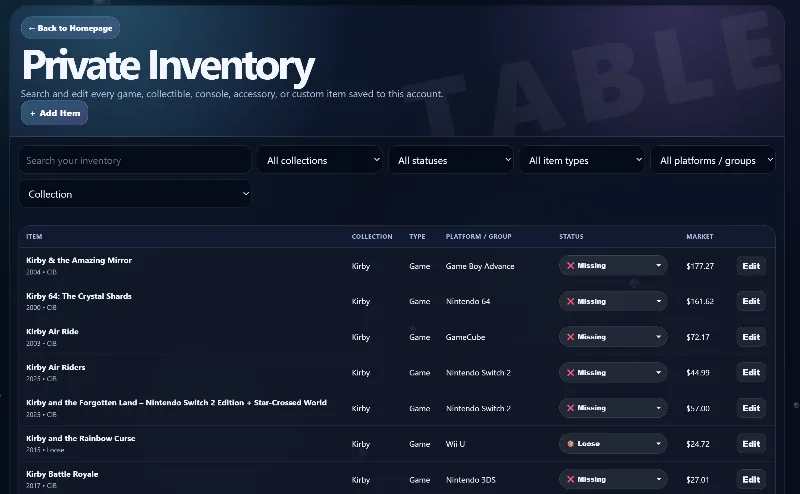
Track physical games, platform variants, ownership and completion while keeping large libraries organized and usable.
Abyss Gaming Hub brings physical game tracking, pricing, analytics, original games, offline access, and a customizable soundtrack into one private platform built to feel like your own.
A self-hosted gaming platformPublic visitors see the product. Your collection and account data stay behind authentication.

Demo account with sample data
The collection is the center of Abyss, but the platform around it is what turns the project into a complete product: discovery, analytics, games, music, offline support and a secure account layer.
Track physical games, platform variants, ownership and completion while keeping large libraries organized and usable.
Use pricing, completion analytics, wishlists and next-pickup tools to understand the collection instead of just storing it.
Original games, an adaptive jukebox, custom profiles and visual themes make the Hub feel like a place—not a database. The games can now be tried publicly through the Game Zone.
Abyss is designed to do the repetitive work around a collection for you. Media is normalized for the interface, price data can be refreshed on demand, and the surrounding tools stay connected to the same collection state.
The original games inside Abyss are no longer hidden behind the account wall. Anyone can try the same runtimes used by the private Hub; guests get temporary session-only progress, while signed-in players keep their normal saves.

Take the Tidewing through hostile currents, survive escalating waves, and build out your pilot progression.
Play in Game Zone
Build a reef defense and learn a growing enemy roster.
Play
Grow plots, research automation, and develop the pond.
Play
Explore regions, gather resources, fight, craft, and follow quests.
PlayAbyss keeps each major workflow distinct while sharing a consistent visual system, so dense collection data can coexist with games, dashboards and offline tools without becoming noise.
Organize physical games by franchise and platform, record ownership and completion, manage variants, and keep the collection readable from desktop or mobile.
The public homepage is intentionally separate from the authenticated application. Behind it, Abyss uses a modular Python server, SQLite-backed account and collection data, generated delivery bundles, offline service-worker infrastructure and focused browser modules.
Abyss keeps the public product site separate from private account and collection data, then layers HTTPS, rate limits, session controls, optional MFA and bot-resistant authentication around the public sign-in boundary.
Sign in to open the private Hub, or create an account when public registration is available.